
Interdisziplinärer Naturschutz
Interdisziplinärer Naturschutz
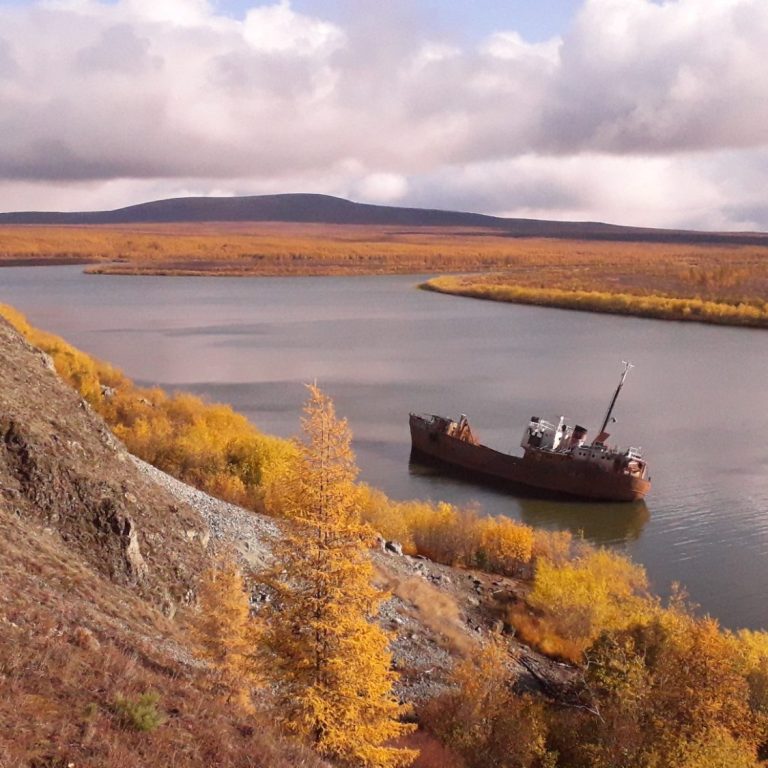
Im Rahmen meiner Dissertation habe ich sieben Publikationen in namenhaften Journalen publiziert.
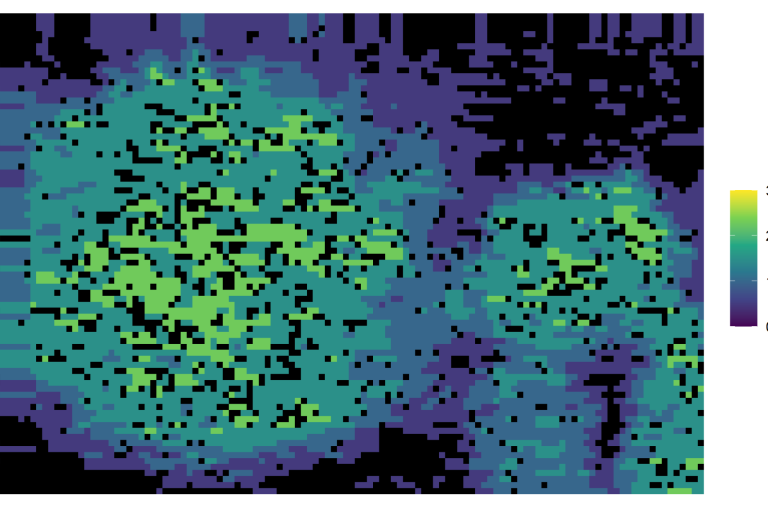
Arctic soils are the largest pool of organic carbon compared with other soils globally and serve as a main source for greenhouse gases, especially in the course of the predicted future temperature increase. With increasing temperatures, substantial thawing of the permafrost layer of soils is expected, altering the availability of calcium in those soils, with an increase by ∼5 mg Ca g −1 DW predicted for Alaska. Here we show for two representative soils in Alaska (initially Ca-poor or Ca-rich) that this increase in Ca availability will lead to decreases in CO 2 release by 50% and 57%. It is already well-known that the cation bridging of Ca ions to organic carbon renders this carbon unavailable for microbial respiration and that Ca is altering the transformation of C org by microbes. Here we show that the decrease of the soil CO 2 release may be also due to enhanced aragonite formation (by 300% for Ca-poor and 90−200% for Ca-rich soils), as revealed by synchrotron-based scanning transmission X-ray microscopy. We therefore call upon field experiments for validation of this process and inclusion of this process in global and local carbon budget models.
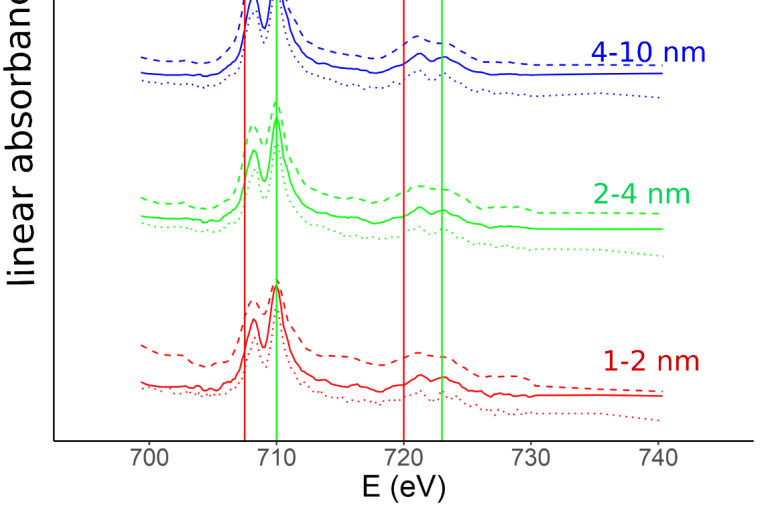
Arctic permafrost soils store large amounts of organic carbon and nutrients. With deepening of the perennial thawing upper active layer due to rising temperatures in the Arctic, not only the mobility of organic matter (OM), but also those of elements like silicon (Si) or calcium (Ca) may increase. It is known that major elements like Si and Ca can affect mineralization rates of OM, consequently influencing the carbon cycle. But only little is known about the interactions of Si and Ca with inorganic nutrients like iron (Fe) or potentially toxic elements like aluminum (Al) in Artic soils. In this study, we analyzed the effect of Si and Ca fertilization in laboratory incubation experiments with soil samples from several Arctic regions. Our results show a significant increase in Fe and Al mobility (Mehlich-3 extractable) after increasing Si. Using high resolution X-ray microscopy (STXM/NEXAFS), we show that Si promotes Fe(II) phases and by this increases Fe mobility. Al mobility was increased for acidic and neutral pH soils but decreased for alkaline soils after increasing Si. Furthermore, we show a decreased Al mobility after increasing Ca, independent on the original pH values and the OM content of the soils. These results demonstrate the importance of interactions between Si and Ca on one hand and Fe and Al mobility on the other hand for Arctic soils.
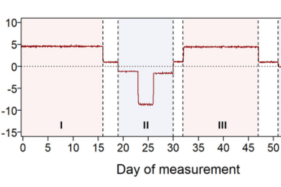
Arctic soils are the largest pool of soil organic carbon worldwide. Temperatures in the Arctic have risen faster than the global average during the last decades, decreasing annual freezing days and increasing the number of freeze-thaw cycles (temperature oscillations passing through zero degrees) per year as the temperature is expected to fluctuate more around 0 °C. At the same time, proceeding deepening of seasonal thaw may increase silicon (Si) and calcium (Ca) concentrations in the active layer of Arctic soils as the concentrations in the thawing permafrost layer might be higher depending on location. We analyzed the importance of freeze-thaw cycles for Arctic soil CO2 fluxes. Furthermore, we tested how Si (mobilizing organic C) and Ca (immobilizing organic C) interfere with the soil CO2 fluxes in the context of freeze-thaw cycles. Our results show that with each freeze-thaw cycle the CO2 fluxes from the Arctic soils decreased. Our data revealed a considerable CO2 emission below 0 °C. We also show that pronounced differences emerge in Arctic soil CO2 fluxes with Si increasing and Ca decreasing CO2 fluxes. Furthermore, we show that both Si and Ca concentrations in Arctic soils are central controls on Arctic soil CO2 release, with Si increasing Arctic soil CO2 release especially when temperatures are just below 0 °C. Our findings could provide an important constraint on soil CO2 emissions upon soil thaw, as well as on the greenhouse gas budget of high latitudes. Thus we call for work improving understanding of freeze-thaw cycles as well as the effect of Ca and Si on carbon fluxes, as well as for increased consideration of those factors in wide-scale assessments of carbon fluxes in the high latitudes.
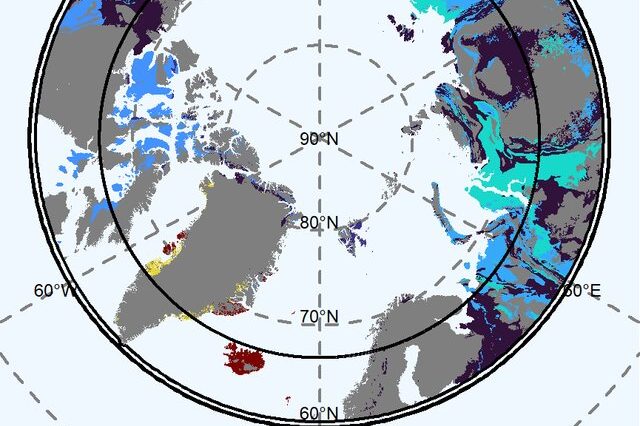
Arctic soils store large amounts of organic carbon and other elements, such as amorphous silicon, silicon, calcium, iron, aluminum, and phosphorous. Global warming is projected to be most pronounced in the Arctic, leading to thawing permafrost which, in turn, changes the soil element availability. To project how biogeochemical cycling in Arctic ecosystems will be affected by climate change, there is a need for data on element availability. Here, we analyzed the amorphous silicon (ASi) content as a solid fraction of the soils as well as Mehlich III extractions for the bioavailability of silicon (Si), calcium (Ca), iron (Fe), phosphorus (P), and aluminum (Al) from 574 soil samples from the circumpolar Arctic region. We show large differences in the ASi fraction and in Si, Ca, Fe, Al, and P availability among different lithologies and Arctic regions. We summarize these data in pan-Arctic maps of the ASi fraction and available Si, Ca, Fe, P, and Al concentrations, focusing on the top 100 cm of Arctic soil. Furthermore, we provide element availability values for the organic and mineral layers of the seasonally thawing active layer as well as for the uppermost permafrost layer. Our spatially explicit data on differences in the availability of elements between the different lithological classes and regions now and in the future will improve Arctic Earth system models for estimating current and future carbon and nutrient feedbacks under climate change (10.17617/3.8KGQUN, Schaller and Goeckede, 2022).
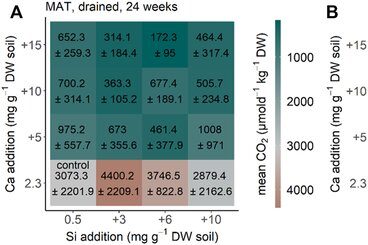
Future warming of the Arctic not only threatens to destabilize the enormous pool of organic carbon accumulated in permafrost soils but may also mobilize elements such as calcium (Ca) or silicon (Si). While for Greenlandic soils, it was recently shown that both elements may have a strong effect on carbon dioxide (CO2) production with Ca strongly decreasing and Si increasing CO2 production, little is known about the effects of Si and Ca on carbon cycle processes in soils from Siberia, the Canadian Shield, or Alaska. In this study, we incubated five different soils (rich organic soil from the Canadian Shield and from Siberia (one from the top and one from the deeper soil layer) and one acidic and one non-acidic soil from Alaska) for 6 months under both drained and waterlogged conditions and at different Ca and amorphous Si (ASi) concentrations. Our results show a strong decrease in soil CO2 production for all soils under both drained and waterlogged conditions with increasing Ca concentrations. The ASi effect was not clear across the different soils used, with soil CO2 production increasing, decreasing, or not being significantly affected depending on the soil type and if the soils were initially drained or waterlogged. We found no methane production in any of the soils regardless of treatment. Taking into account the predicted change in Si and Ca availability under a future warmer Arctic climate, the associated fertilization effects would imply potentially lower greenhouse gas production from Siberia and slightly increased greenhouse gas emissions from the Canadian Shield. Including Ca as a controlling factor for Arctic soil CO2 production rates may, therefore, reduces uncertainties in modeling future scenarios on how Arctic regions may respond to climate change.
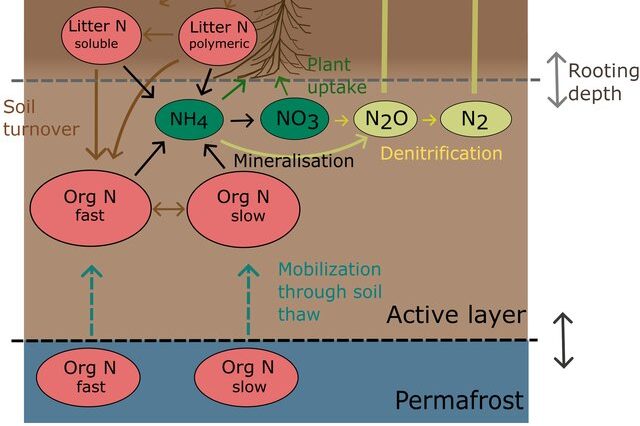
Biogeochemical cycling in permafrost‐affected ecosystems remains associated with large uncertainties, which could impact the Earth's greenhouse gas budget and future climate policies. In particular, increased nutrient availability following permafrost thaw could perturb the greenhouse gas exchange in these systems, an effect largely unexplored until now. Here, we enhance the terrestrial ecosystem model QUINCY (QUantifying Interactions between terrestrial Nutrient CYcles and the climate system), which simulates fully coupled carbon (C), nitrogen (N) and phosphorus (P) cycles in vegetation and soil, with processes relevant in high latitudes (e.g., soil freezing and snow dynamics). In combination with site‐level and satellite‐based observations, we use the model to investigate impacts of increased nutrient availability from permafrost thawing in comparison to other climate‐induced effects and CO2 fertilization over 1960 to 2018 across the high Arctic. Our simulations show that enhanced availability of nutrients following permafrost thaw account for less than 15% of the total Gross primary productivity increase over the time period, despite simulated N limitation over the high Arctic scale. As an explanation for this weak fertilization effect, observational and model data indicate a mismatch between the timing of peak vegetative growth (week 26–27 of the year, corresponding to the beginning of July) and peak thaw depth (week 32–35, mid‐to‐late August), resulting in incomplete plant use of nutrients near the permafrost table. The resulting increasing N availability approaching the permafrost table enhances N loss pathways, which leads to rising nitrous oxide (N2O) emissions in our model. Site‐level emission trends of 2 mg N m⁻² year⁻¹ on average over the historical time period could therefore predict an emerging increasing source of N2O emissions following future permafrost thaw in the high Arctic.
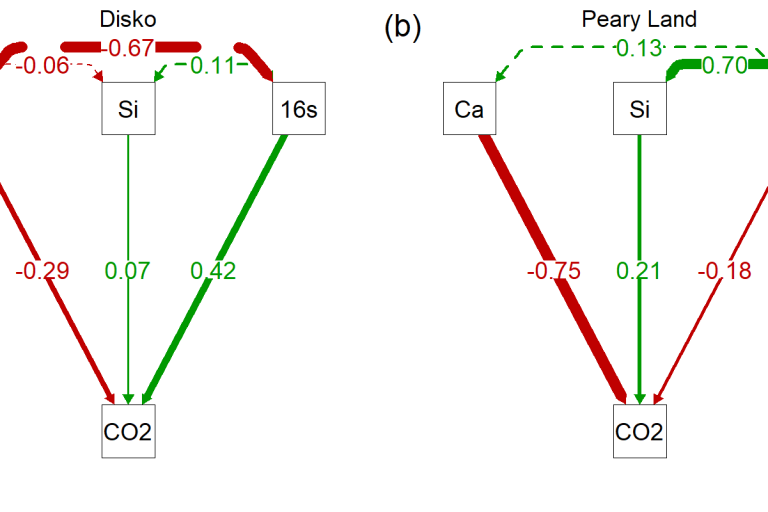
Global warming is most pronounced in the Arctic region. Greenhouse gas (GHG) release from Arctic soils increase due to global warming. By this, the Arctic may change from currently being a carbon sink to a future source. To improve accurate predictions of future GHG release from Arctic soils, it is important to unravel factors controlling both the microbial community structure and activity. Soil microbial activity is important for Arctic greenhouse gas production, but depends on soil conditions such as salinity being increased by calcium (Ca) and decreased by amorphous silica (Si) potentially enhancing water availability. In the Arctic, climate changes may alter salinity by changing Si and Ca concentrations upon permafrost thaw as a result of global warming with Si potentially decreasing and Ca potentially increasing salinity. Here, we show that higher Si concentration increased and higher Ca concentrations decreased the microbial CO2 production for both a salt-poor and a salt-rich soil from Greenland. In the salt-rich soil, Si amendment increased CO2 production and the abundance of gram-negative bacteria. However, the bacterial community became dominated by spore-forming gram-positive Firmicutes and Actinobacteria. The CO2 release from soils was directly affected by the abundance of bacteria and fungi, and their community structure. Our results highlight the importance of the soil Si and Ca concentration on organic carbon turnover by strongly changing microbial abundance and community structure, with consequences for CO2 release in the Arctic. Consequently, Ca and Si and their relation to Arctic soil microbial community structure has to be considered when estimating pan-Arctic carbon budgets.
Wir benötigen Ihre Zustimmung zum Laden der Übersetzungen
Wir nutzen einen Drittanbieter-Service, um den Inhalt der Website zu übersetzen, der möglicherweise Daten über Ihre Aktivitäten sammelt. Bitte überprüfen Sie die Details in der Datenschutzerklärung und akzeptieren Sie den Dienst, um die Übersetzungen zu sehen.